
IoT · 2 min read
When an alert has to be a phone call
Escalation design for life-safety monitoring, and why push notifications aren’t enough at 3am.
scoi.io · Apr 9, 2026

A push notification is a suggestion. A ringing phone is a demand. IoThings monitors buildings where a missed gas or flood event is not an analytics problem. The escalation ladder had to assume people are asleep, on another site, or have notification summaries turned off.
Start from the failure, not the channel
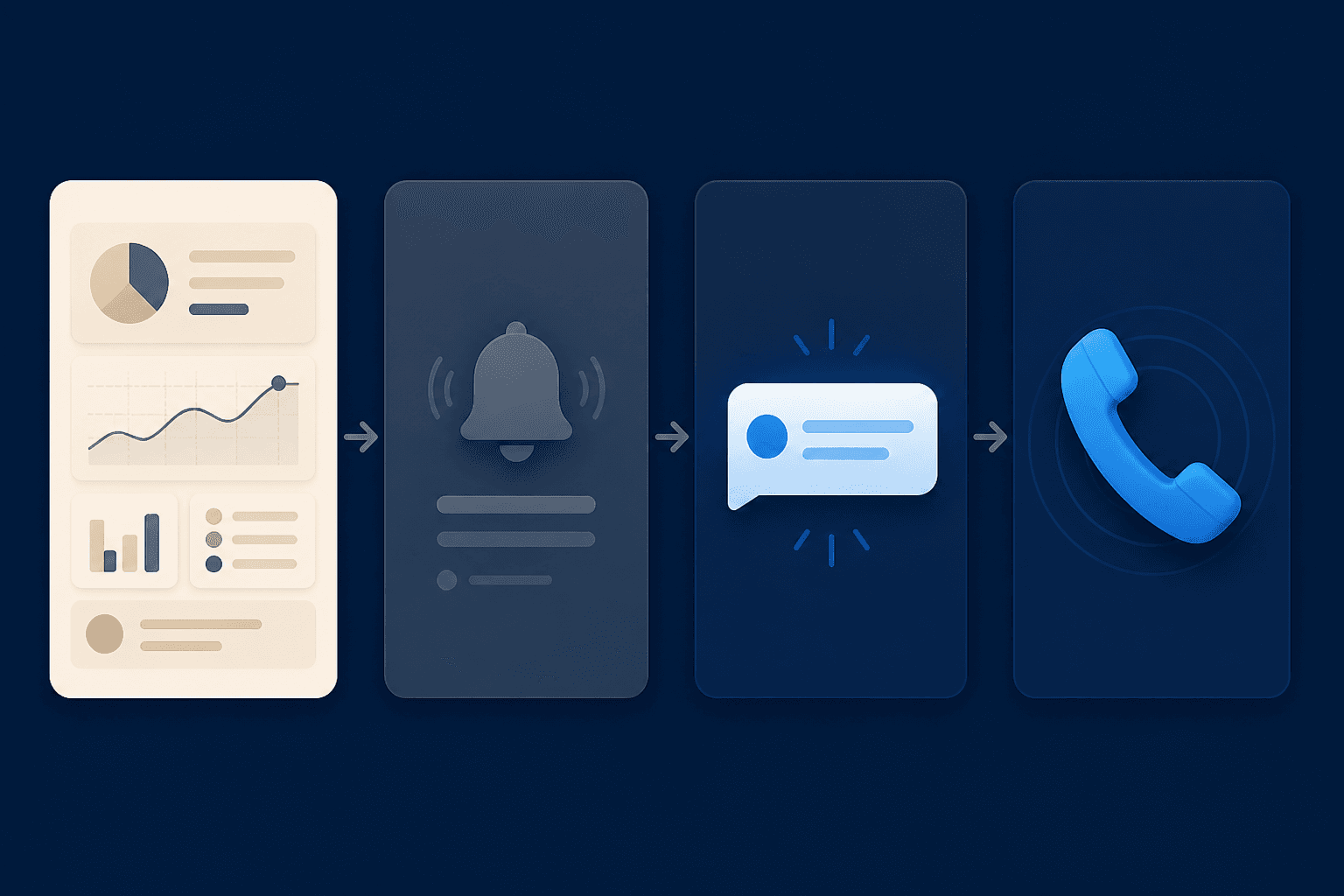
We did not ask “can we send SMS.” We asked “what happens if nobody acknowledges in four minutes.” That question produces a sequence:
- in-app and push to the on-call roster
- SMS to the same roster
- a voice call that speaks the site, the sensor, and the acknowledgement code
- a second-line roster if the code never comes back
Each step is a recorded state, not a fire-and-forget webhook. If Twilio is down, the next channel still has work to do. If the first person taps “acknowledge” by accident, the system still wants a reason.
Voice is a product surface
The IVR script is short because panic is loud. Site name. Sensor. Severity. Press 1 to own it. Press 2 if you cannot respond. Anything else repeats once and then escalates.
We do not put a twelve-option menu in front of a 3am call. We do put a tenant-specific greeting so a contractor who covers three buildings knows which one is ringing.
Acknowledgements have to be expensive enough
A swipe-away is not an acknowledgement. A one-tap “seen” is barely better. The call asks for a code that only exists on that incident. That is annoying. It is also how you know a human decided.
The dashboard then shows who owned it, from where, and how long the ladder ran. That log is what a facilities manager reads after a near miss — and what a tenant’s lawyer will ask for.
If the event is life-safety, design the 3am path first. The pretty tile on the homepage can wait.
Same skill as the rest of the work on this site: a messy real-world signal becomes a system someone can depend on when they are not looking at a screen.